


The Legend of Chinese Tea
Legend says that Shen Nong was the first person to discover tea. Shen Nong was born at a time when the human race no longer had enough food. He had a transparent abdomen, and one could clearly see all of his internal organs. When he grew up, he taught the ancient Chinese the practices of agriculture and farming. Although people were then able to feed themselves better, they often got sick or died because they ate things indiscriminately. To help save lives, Shen Nong decided to taste hundreds of herbs: he put the tasty herbs in his left-hand bag – these were for people to eat – and the ones that weren’t tasty he put in his right-hand bag to be used for medicine.
One day, he tried a small, fresh leaf. Because his abdomen was transparent, people could see the leaf cleaning his every organ; afterward, his insides were refreshed and clean. He named this leaf ‘cha’, which means ‘check’ in English. He continued to taste different herbs, using ‘cha’ to detoxify himself whenever he ate something poisonous. However, he died after tasting ‘heartbreak grass’ because it was too toxic and there was no time to eat a tealeaf. Thus, he sacrificed himself to save humanity, and came to be called the ‘Emperor of the Five Grains’. Because of Shen Nong, tea was widely known as ‘medicine’ for a long time.
The Real History
In real history, the tea industry has developed gradually over time.
- In the time of the Western and Eastern Zhou Dynasties (around 3000 B.C.), people began to plant tea trees and used tea as tribute or vegetables.
- During the Western Han Dynasty (2000 B.C.), a commercial tea trade developed, with Chengdu the earliest distribution centre.
- From the Eastern Han period (1500 B.C.), people started to make tea bricks, making the tea easier to carry.
- From the Tang Dynasty (1200 B.C.), tea-drinking culture began to spread to be enjoyed by all social classes. Lu Yu, the author of ‘The Classic of Tea’ in this period, is still respected as the ‘Sage of Tea’ because of his contribution to Chinese tea culture.
- From the Song Dynasty (1000 B.C.), with the improvement of tea-making technologies and more attention being paid to the source or quality of water, tea contests became popular in China. Whipped powdered tea was very fashionable during this time; however, the fashion had disappeared completely by the end of the Yuan.
- During the Yuan Dynasty (700 B.C.), loose tea began to appear, which was very popular among the lower classes in The tea brick still dominated the upper-class market; nevertheless, more and more people were becoming accustomed to drinking tea made from tea leaves steeped in boiling water.
- During the Ming Dynasty (600 B.C.), tea-making technology was developed to make yellow, black and flower tea.
- In the Qing Dynasty (300 B.C.), China became the only country exporting tea. Chinese tea became well known all over the world.
Types of Chinese tea
If you ever have the chance to go to a Chinese tea market, you will find so many different teas for you to taste. You may get confused about how best to work your way through them all to discover the ones you really like. In China, tea is categorised totally differently from the Western tea culture. For example, in the West, teas are often described according to the colour of the leaves; however, in China, the category name refers to the colour of the brew. So, black tea in Chinese culture is called ‘Hong Cha’, meaning ‘red tea’. Confusingly, the term ‘black tea’ is also used to describe tea served without milk in some Western cultures.
The types of Chinese tea are:
- White Tea
- Green Tea
- Yellow Tea
- Oolong Tea
- Black Tea
- Dark Tea
To know more about the differences among these teas, please read this article we wrote.
- 34 Oolong Tea
- 37 Pu-erh Tea
- 16 Green Tea
- 4 Jasmine Tea
- 24 Black Tea
- 7 White Tea
- 3 Dark Tea
- 55 Premium Chinese Tea
- 22 Tea Gifts
- 4 Tea Samples
- 202 Teaware & Accessories
- 1 Bamboo
- 21 Bitter
- 1 Burnt
- 14 Caramel
- 2 Charcoal
- 5 Chestnut
- 4 Cinnamon
- 25 Earthy
- 74 Floral
- 26 Fresh
- 41 Fruity
- 3 Gardenia
- 8 Grassy
- 9 Herbal
- 25 Honey
- 1 Honeysuckle
- 4 Jasmine
- 3 Jujube
- 7 Longan
- 2 Lotus
- 3 Lychee
- 9 Milky
- 8 Mineral
- 2 Mossy
- 1 Orange
- 19 Orchid
- 1 Reedy
- 13 Rocky
- 1 Sour
- 102 Sweet
- 3 Sweet Potato
- 1 Wintersweet
- 35 Woody
- 1 Betel Nut
- 3 Chen
- 1 Lily
- 1 Peach
- 3 Smoky
Product Filters
Filter by Category
Filter by Pu-erh Type
Filter by Type
Filter by Taste
Filter by Origin
Filter by Caffeine Level
Filter by Leaf Form
Filter by Brand
Filter by Colour
Filter by Material
Filter by Number of Pieces
Filter by Colour
Filter by Material
Filter by Size
Filter by Colour
Filter by Material
Filter by Size
Filter by Colour
Filter by Material
Filter by Size
Filter by Colour
Filter by Material
Filter by Origin
-
 $849.99[vc_row et_row_padding="true" el_class="p-variations"][vc_column width="1/3" offset="vc_col-xs-4"][et_image alignment="aligncenter" image="30470" img_link="url:/p/hand-painted-lang-hong-enamel-dunhuang-gaiwan-san-cai/"][/et_image][/vc_column][vc_column width="1/3" offset="vc_col-xs-4"][et_image alignment="aligncenter" image="30531" extra_class="p-current"][/et_image][/vc_column][vc_column width="1/3" offset="vc_col-xs-4"][/vc_column][/vc_row]
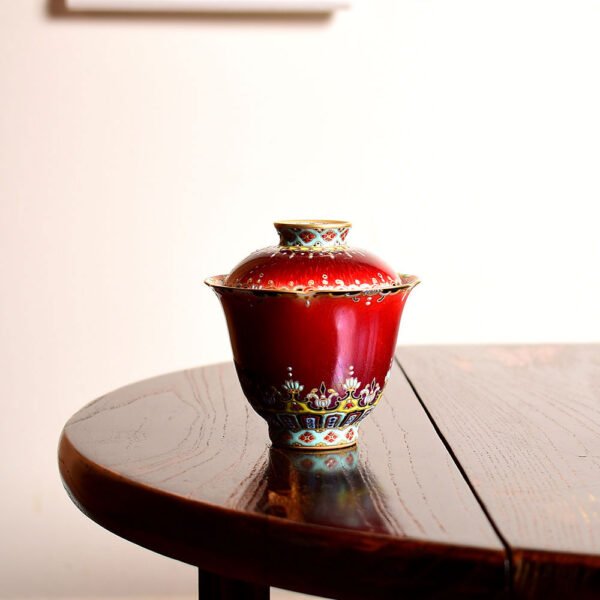
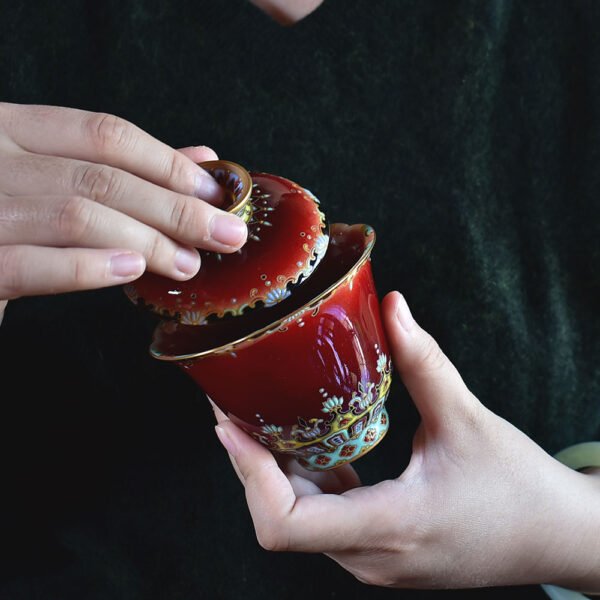
This Ercai Gaiwan is handcrafted using the technique of gold painting, Lang Hong colouring and enamel glazed paint. The pattern on its painting is Dunhuang-style, with vibrant and luxurious colours, exuding a sense of luxury and elegance.
Gold painting, one of the decorative techniques, involves applying gold powder (gold dust) or bright gold (gold solution) on the porcelain surface to create intricate patterns or to complement other decorations such as borders or a golden background. Afterwards, the Gaiwan is fired at a low temperature to achieve the final finish. The lid, rim, and base of this Ercai Gaiwan are all embellished with intricate gold outlining craftsmanship.
The patterns on this Gaiwan depict Dunhuang-style designs, layered and intricate, displaying a rich array of colours. Among them, the lotus pattern is the most used decorative motif in Dunhuang art. From the Northern Liang to the Yuan Dynasty, lotus flowers can be found in every cave of the Mogao Grottoes. In Buddhism, the lotus symbolizes purity and enlightenment. It is believed that one’s soul can attain rebirth through the lotus, leading to the blissful Western Pure Land. Within the Mogao Grottoes, lotus flowers adorn the background, embellishing figures of bodhisattvas and celestial beings, embodying the sacred and immaculate nature of Buddhas and bodhisattvas. Hence, the lotus is the quintessential flower representing Buddhism. Apart from the lotus, another significant motif is the honeysuckle, also known as Jin Hua (golden-silver flower). It is an important decorative symbol in Dunhuang art, introduced alongside Buddhist art in China as a decorative floral theme. The rise of honeysuckle patterns in China occurred nearly simultaneously with the spread of Buddhism. Its extensive use in Buddhist decorations during the Northern Dynasties influenced secular ornamentation at that time. Honeysuckle blooms during summer, transitioning from white to yellow after budding, shedding old leaves in late autumn, and promptly producing new leaves. It endures even in the harshest winter conditions, quietly thriving in the wild with minimal requirements of water and soil. As a result, the honeysuckle pattern found abundant application in Buddhist-related decorations, drawing from its persistent growth characteristics. Furthermore, the motif of the “Baoxiang Flower,” also known as Baoxianhua or Baolianhua, is another traditional auspicious pattern in Dunhuang decorations. It is one of the auspicious Three Treasures and was prevalent during China’s Sui and Tang Dynasties. The concept of “Baoxiang” originates from Buddhism, where it refers to a respectful term for Buddhist images. The Baoxiang Flower represents an idealized form of purity, grace, and beauty.
In addition to these captivating decorative patterns, the craftsmanship of Lang Hong ceramics is also deserving of praise. Firstly, the full name of Lang Hong is “Langyao Red,” also known as “Gem Red” or “Ox Blood Red.” It is one of the most vibrant colours in traditional Chinese precious copper red glazes. Lang Hong glaze is achieved by using copper as a colouring agent and firing it at a high temperature of 1300°C. Since copper elements easily evaporate at high temperatures, the range of colour expression is limited. The firing process demands strict control over the atmosphere and temperature, and the outcome is greatly affected by external factors, making it a highly challenging process to successfully produce Lang Hong ceramics. Lang Hong glaze boasts a smooth and translucent surface, resembling glass, with crackled patterns resembling cow hair texture. The glaze exhibits a deep and vivid colour, resembling freshly congealed ox blood with its brilliant crimson hue, symbolizing auspiciousness, and wealth. Revered as a “treasure among a thousand kilns,” the red-glazed porcelain of Lang Hong showcases a distinctive ethnic style, shining like a dazzling gem in the history of world ceramics. The colour red, known for its auspiciousness and affluence, has elevated Lang Hong ceramics to a radiant and remarkable masterpiece in the realm of ceramic art.
Enamel, on the other hand, is a decorative technique that involves transplanting the cloisonné enamel method onto a porcelain body as an overglaze colour decoration. Enamel decoration on porcelain, known as “Fàlángcǎi” in Chinese, entails painting colourful patterns on the porcelain surface and then firing it at high temperatures to fuse the colours with the porcelain, achieving a durable and splendid design. These patterns often feature exquisite themes such as flowers, birds, figures, and landscapes, reflecting the essence of traditional Chinese culture and art. The process of creating enamel decorations is extremely intricate and complex, requiring skilled and experienced craftsmen. First, the porcelain prototype is made, and then special mineral pigments are used to paint patterns on its surface. Once the painting is completed, a series of firing processes follow, during which the temperature and timing for both the porcelain and the enamel colours are crucial factors. Improper temperature or timing can result in cracks in the porcelain or unstable colours. Enamel decoration is considered a treasure in traditional Chinese craftsmanship, representing the wisdom and skills of ancient Chinese artisans.
This Gaiwan showcases exquisite Lang Hong craftsmanship, with intricate and delicate Dunhuang patterns that carry profound symbolism.
-
 $289.99
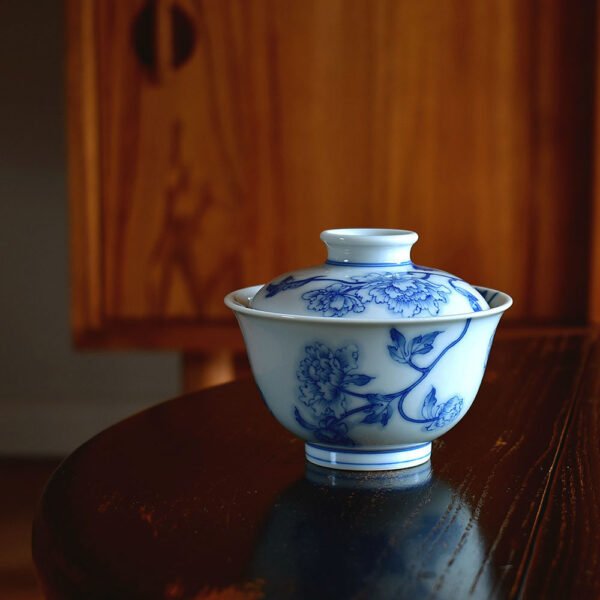
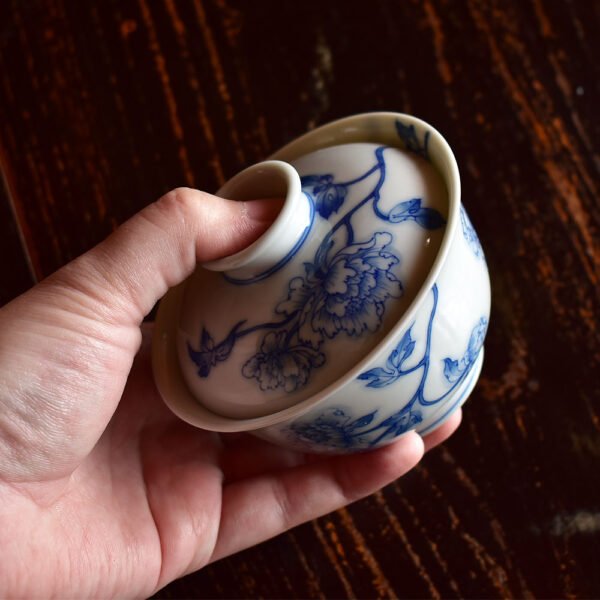
This set is entirely handmade and hand-painted. The pattern features blooming peonies, which are one of the symbols in traditional Chinese culture, representing wealth, happiness, and prosperity, which makes it commonly used in various aspects of life in ancient China.
The entire shape of it is smooth and lustrous, while the painting is vivid and ethereal. The exquisite blue and white peonies provide you with a unique visual enjoyment while you enjoy your tea.
-
 From: $455.98
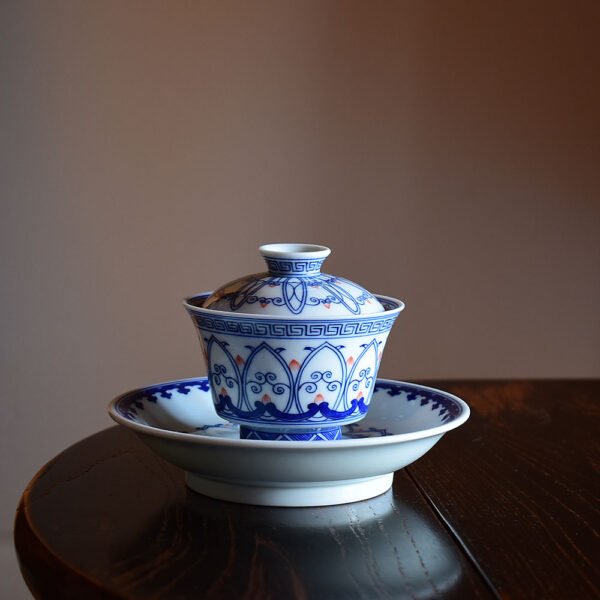
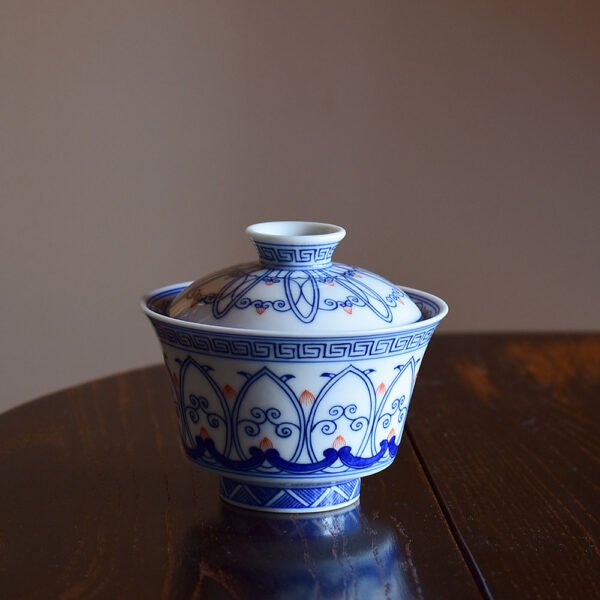
This tea set is completely handmade and hand-painted. The special craft used in this teaware includes Blue and white underglaze colour and underglaze red. The special horseshoe-shaped design allows for easy handling and prevents becoming too hot to touch.
The pattern featured is called “Bao Xiang” in Chinese, which is a traditional decorative motif representing one of the auspicious three treasures (Bao Xiang flower, Money tree, and Treasure basin), prevalent during the Sui and Tang dynasties in China. Bao Xiang pattern is also known as ‘Bao Xian Hua’ or ‘Bao Lian Hua’. Its lines are clear, and the colour is serene and antique. The Bao Xiang pattern design of this teaware is neat, and complex but not messy, and the whole picture of it is full and rich in details.
In Chinese culture, the Bao Xiang pattern symbolizes auspiciousness and happiness, representing people’s aspirations for happiness. It is widely popular in the decoration of silk brocade, bronze mirrors, and porcelain, showcasing people’s pursuit of a better life.
This tea set includes:
-
 From: $455.98
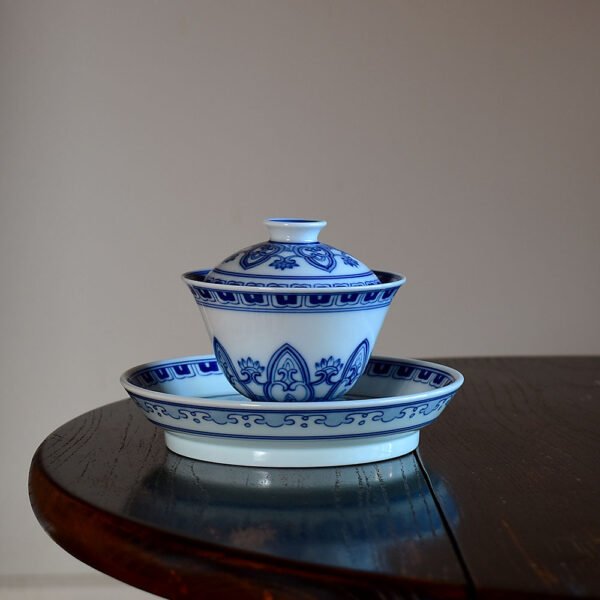
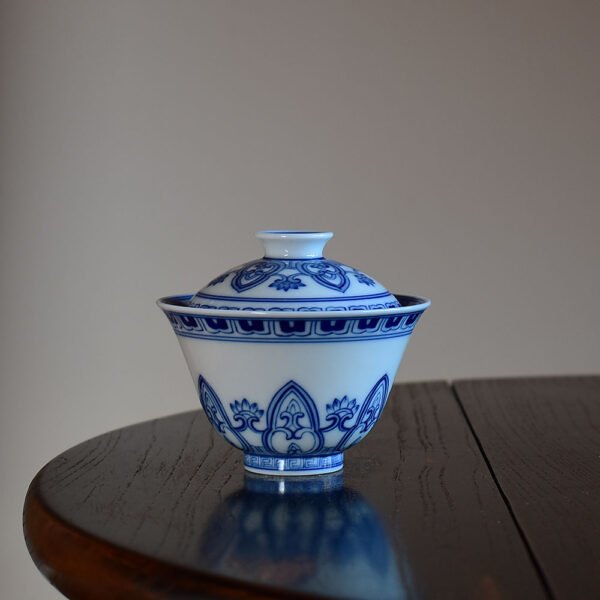
This tea set is completely handmade and hand-painted. The pattern featured is called “Bao Xiang” in Chinese, which is a traditional decorative motif representing one of the auspicious three treasures (Bao Xiang flower, Money tree, and Treasure basin), prevalent during the Sui and Tang dynasties in China. Bao Xiang pattern is also known as ‘Bao Xian Hua’ or ‘Bao Lian Hua’. Its lines are clear, and the colour is serene and antique. The Bao Xiang pattern design of this teaware is neat, and complex but not messy, and the whole picture of it is full and rich in details.
In Chinese culture, the Bao Xiang pattern symbolizes auspiciousness and happiness, representing people’s aspirations for happiness. It is widely popular in the decoration of silk brocade, bronze mirrors, and porcelain, showcasing people’s pursuit of a better life.
This tea set features smooth and concise curves, combining the unique beauty of the Bao Xiang pattern, creating a visually appealing and enjoyable tea-drinking experience.
This tea set includes:
-
 From: $489.98
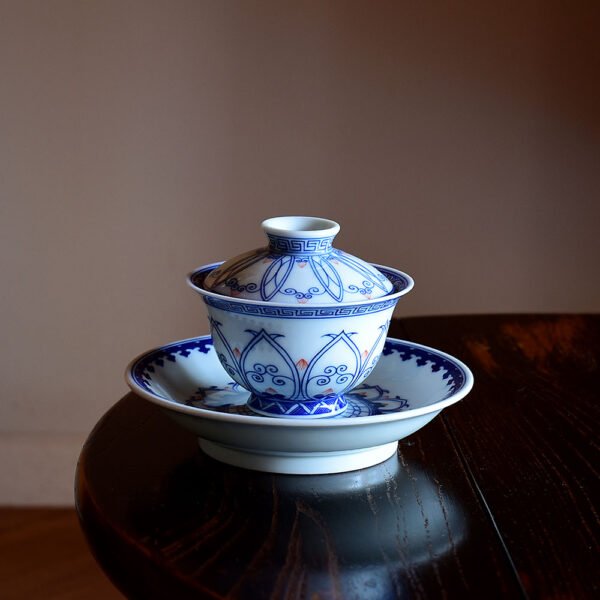
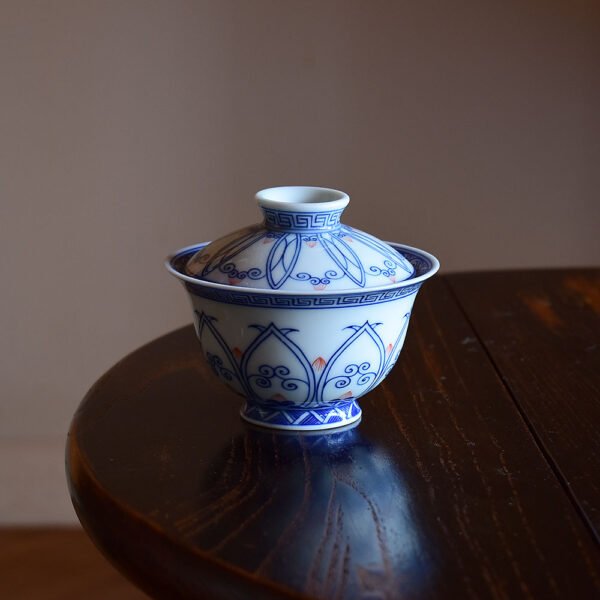
This tea set is completely handmade and hand-painted. The special craft used in this teaware includes Blue and white underglaze colour and underglaze red.
The pattern featured is called “Bao Xiang” in Chinese, which is a traditional decorative motif representing one of the auspicious three treasures (Bao Xiang flower, Money tree, and Treasure basin), prevalent during the Sui and Tang dynasties in China. Bao Xiang pattern is also known as ‘Bao Xian Hua’ or ‘Bao Lian Hua’. Its lines are clear, and the colour is serene and antique. The Bao Xiang pattern design of this teaware is neat, and complex but not messy, and the whole picture of it is full and rich in details.
In Chinese culture, the Bao Xiang pattern symbolizes auspiciousness and happiness, representing people’s aspirations for happiness. It is widely popular in the decoration of silk brocade, bronze mirrors, and porcelain, showcasing people’s pursuit of a better life.
This tea set features smooth and concise curves, combining the unique beauty of the Bao Xiang pattern, creating a visually appealing and enjoyable tea-drinking experience. The blue and red underglaze colours complement each other and create a beautiful radiance.
This tea set includes:
-
 Out of Stock
$149.99[vc_row et_row_padding="true" el_class="p-variations"][vc_column width="1/3" offset="vc_col-xs-4"][et_image alignment="aligncenter" image="29663" img_link="url:%2Fp%2Fstoneware-clay-powder-sprinkling-small-teapot-tall%2F"][/et_image][/vc_column][vc_column width="1/3" offset="vc_col-xs-4"][et_image alignment="aligncenter" image="29660" img_link="url:%2Fp%2Fstoneware-clay-powder-sprinkling-small-teapot-flat%2F"][/et_image][/vc_column][vc_column width="1/3" offset="vc_col-xs-4"][et_image alignment="aligncenter" image="29657" extra_class="p-current"][/et_image][/vc_column][/vc_row]
Out of Stock
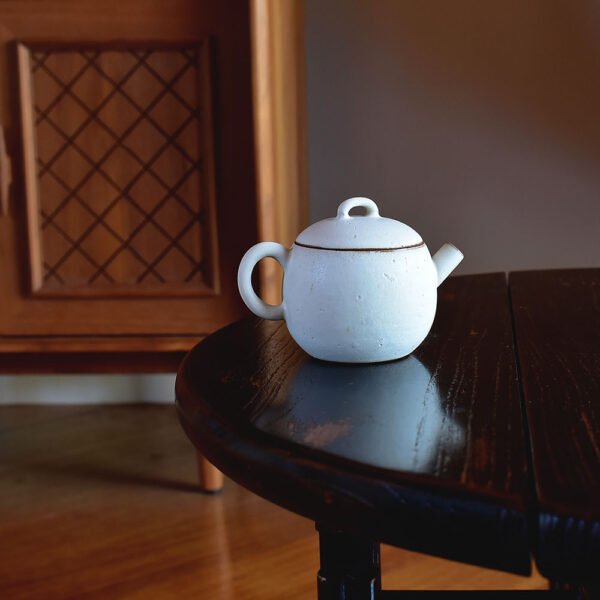
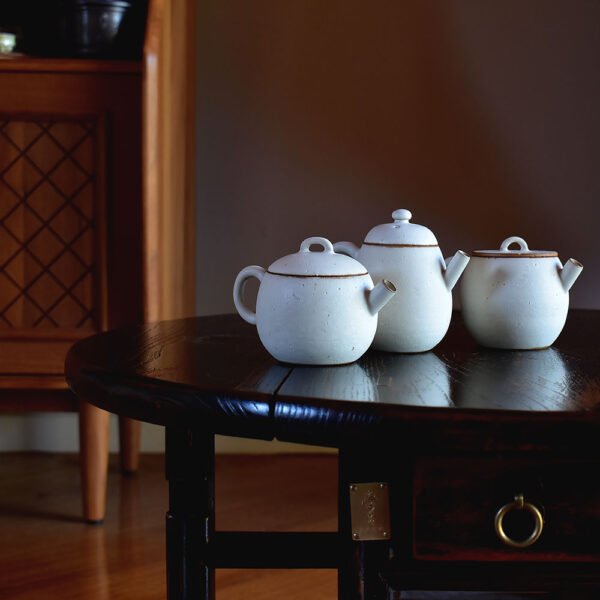
$149.99[vc_row et_row_padding="true" el_class="p-variations"][vc_column width="1/3" offset="vc_col-xs-4"][et_image alignment="aligncenter" image="29663" img_link="url:%2Fp%2Fstoneware-clay-powder-sprinkling-small-teapot-tall%2F"][/et_image][/vc_column][vc_column width="1/3" offset="vc_col-xs-4"][et_image alignment="aligncenter" image="29660" img_link="url:%2Fp%2Fstoneware-clay-powder-sprinkling-small-teapot-flat%2F"][/et_image][/vc_column][vc_column width="1/3" offset="vc_col-xs-4"][et_image alignment="aligncenter" image="29657" extra_class="p-current"][/et_image][/vc_column][/vc_row]This stoneware clay powder sprinkling teapot is entirely handmade. Its appearance presents a rough feeling which is its own unique beauty.
Its special technique -powder sprinkling (‘Fenyin’ in Chinese) also known as “powder blowing”, is named after its appearance resembling a gust of powder blown up by the wind. The characteristic of powder sprinkling is that the traces of its past use gradually change over time. The surface of powder sprinkling has many pores, and once water enters, those traces will unfold like petals. Rustic, understated, and inclusive, these are its features of it. Placed on a tea table, it always exudes a light sense of tranquillity and warmth.
-
 $389.99
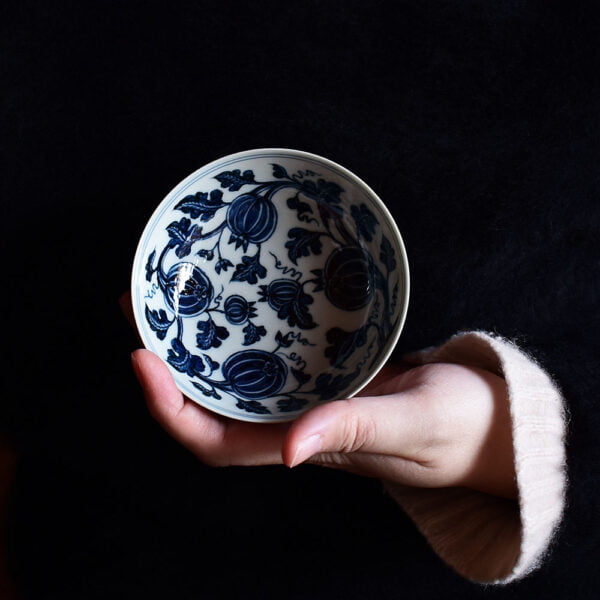
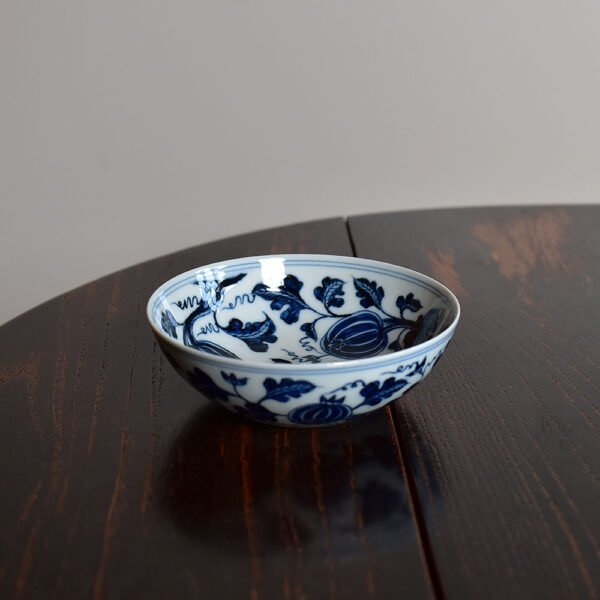
This teacup is made of antique clay with blue and white porcelain craftsmanship which is fully handmade. The pattern on it is a watermelon motif. Watermelon motifs, often combined with entwining vines, carry various rich symbolism and meanings.
In ancient Chinese culture, watermelon symbolizes auspiciousness and happiness. The round and plump shape of the watermelon represents completeness and wholeness; therefore, watermelon is regarded as an auspicious symbol representing happiness and good luck. It also represents abundance and prosperity. As a summer fruit, watermelon is associated with harvest. In rural areas, a bountiful watermelon harvest signifies abundant crops and prosperity, representing the joy of harvest and the fulfillment of material life.
Furthermore, watermelon symbolizes family and reunion. The center of a watermelon contains numerous seeds tightly clustered together, symbolizing family and togetherness. In traditional Chinese culture, family reunions and harmonious family relationships are highly valued, and watermelon is seen as a fruit symbolizing family reunion and kinship. Additionally, watermelon represents blessings and warding off evil. In ancient China, watermelon was also used as a symbol to ward off evil spirits. People believed that watermelon had the power to dispel inauspicious energy and protect people’s health and well-being.
The texture of this teacup is delicate and smooth, and the painting is lively and lifelike. The entire production process is completed by hand, with every detail carefully designed and polished, giving this teacup a unique artistic charm.
-
 $645.99
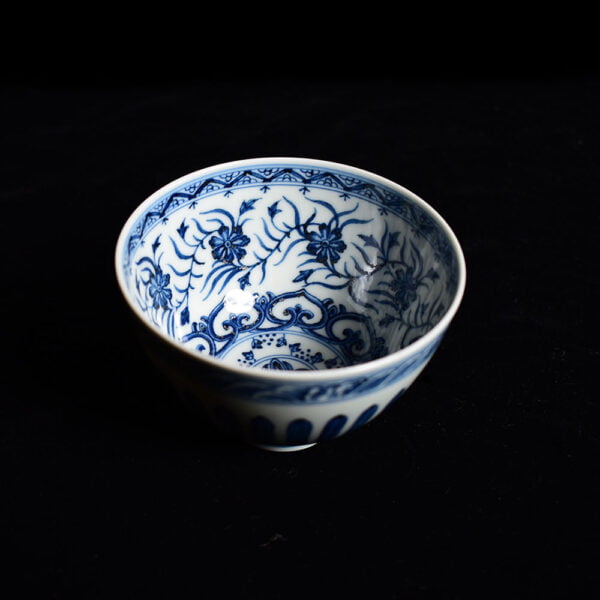
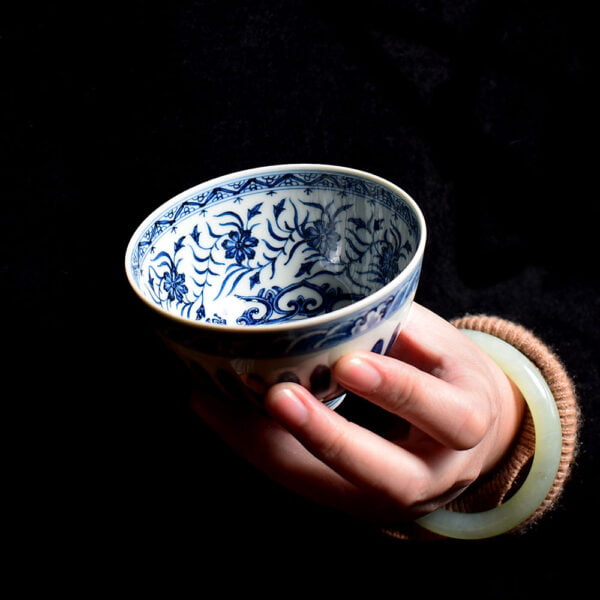
The style of this super beautiful teacup is Ming, using the underglaze blue technique, and entirely handcrafted and hand painted.
This cup is adorned with blue and white patterns of wave and chrysanthemum petals on the outer wall. The interior of the cup is fully covered in blue and white patterns of Baoxiang flowers and Ruyi motifs, creating an overall design that is rich and detailed, with smooth and flowing lines. The blue and white colours are deep and elegant, with a white glaze featuring subtle flashes of blue. The glaze surface is glossy, and the texture is smooth. The cup has a lightweight and elegant shape, achieving a harmonious balance between practicality and aesthetics. At the bottom, there is a chicken-heart-shaped protrusion, hence the name ‘chicken-heart teacup’.
In ancient China, waves naturally referred to the vast ocean, which symbolized gods and immortals and was believed to bestow numerous mystical benefits upon people, such as blessings and longevity. On the other hand, chrysanthemum petal motifs conveyed people’s heartfelt wishes for a blessed, long, and peaceful life.
The Baoxiang flowers inside the cup symbolize good luck, harmony, happiness, and prosperity. The Ruyi motif’s auspiciousness, combining profound meaning with graceful form, represents the auspicious, favourable implications.
In addition, the beautiful tin spots on the porcelain add even more unique charm to it. The formation of tin spots is due to the high content of iron elements in local parts of the blue pigment. After reaching saturation in the high-temperature glaze solution and cooling down, the iron elements in the supersaturated part start to precipitate. If the iron content of the blue pigment is higher and the cooling rate is appropriate, tin spots are more likely to appear on the surface of the ware.
In addition to firing and materials, the formation of tin spots also involves the factor of glaze material. During the painting process, tin spots can also be formed due to the accumulation of blue pigment. Tin spots are more likely to appear on the surface of the ware at the intersections and the starting and ending points of brushstrokes. The formation of tin spots can be said to be a natural creation or an artificial decoration. This tin glazes not only add a rustic texture to the teacup but also imbue it with a unique sense of history.
The body of this teacup is smooth and well-lubricated, while the underglaze blue patterns are vivid and lifelike. The faint tin specks add a touch of charm from a bygone era, evoking a sense of nostalgia and natural beauty, making it exquisitely graceful. Each stroke of the underglaze blue decoration is delicate and captivating, bringing the design to life. The intricate and refined patterns showcase the artist’s profound artistic skills.
-
 $195.99
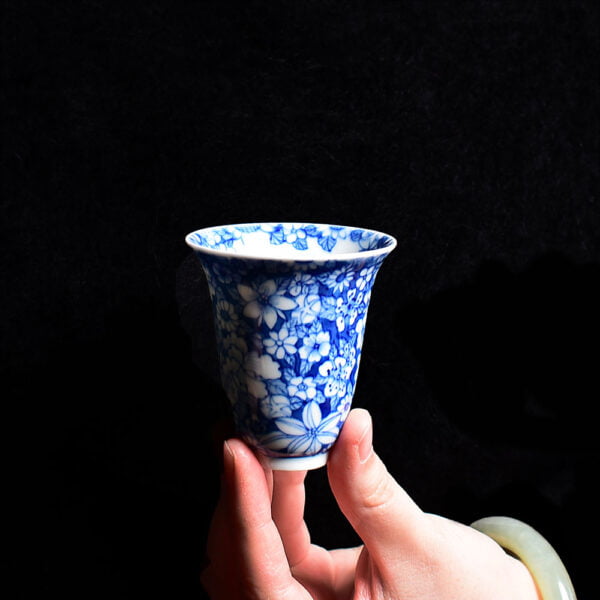
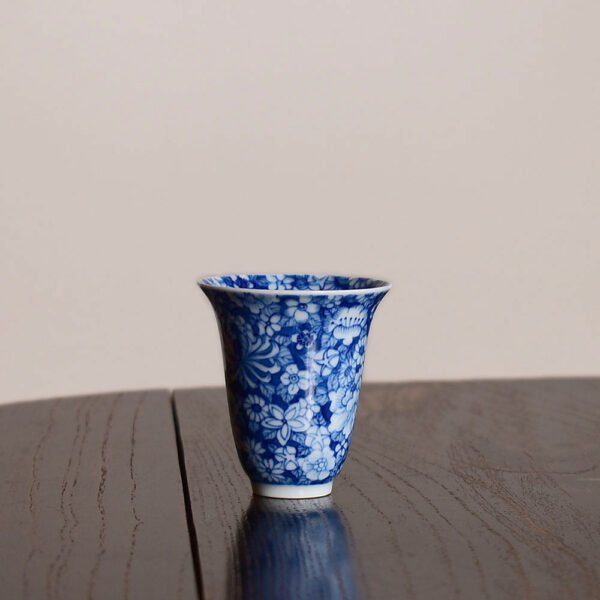
This charming teacup is using blue and white porcelain craftsmanship, made entirely by hand.
The beautiful picture on the body of the teacup is called ‘Wan Hua’, also known as “myriad flowers,” “flowers on top of flowers,” or “adding flowers to enhance beauty,” which is commonly depicted in the central area of the object. It often features large patterns of peonies, surrounded by various smaller floral patterns such as chrysanthemums, camellia, roses, lotuses, lilies, morning glories, and others. The intricate secondary patterns cover the entire surface, symbolizing the gathering of myriad flowers and representing prosperity and harmony.
The delicate brushstrokes vividly outline the different flowers, creating a glossy and elegant appearance. The colours are rich and vibrant, giving the piece a sense of vivid and liveliness.
Note: This tea cup is fully handmade, every teacup can be slightly different.
-
 $509.99
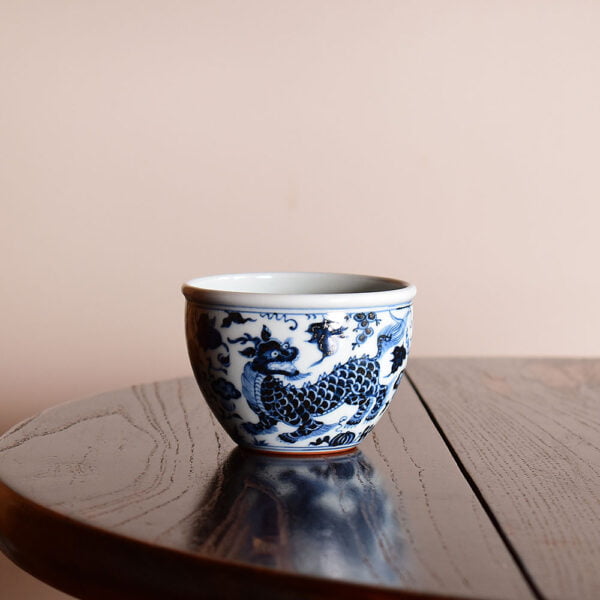
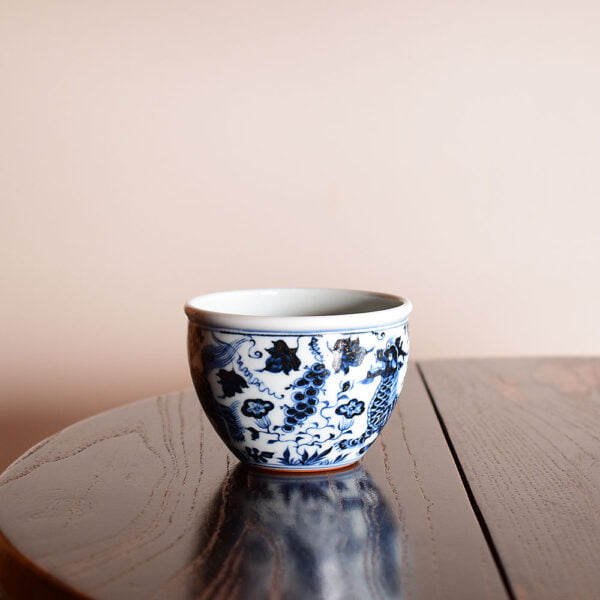
This teacup is made in the style of the Yuan dynasty blue and white porcelain, completely handmade and hand painted by Mr. Chunshen Zhan who is a master artisan, is a senior craftsman in Jiangxi Province. His blue and white imitations of Yuan Dynasty works are vividly depicted, exuding an antique charm, and are truly worth appreciating.
The painting on this teacup depicts a Kylin, which is a mythical creature representing auspiciousness. In ancient Chinese culture, the Kylin is a spiritually auspicious beast. Placing a Kylin at home is believed to bless one with good health, safety, and success while warding off negativity and bringing good luck. It serves as a guardian deity in the household and long-term wearing of Kylin motifs can bless lifelong safety for the wearer. Additionally, the Kylin is a symbol of harmony. Placing it in the living room of a home can promote a smooth career and improve one’s financial fortune. Once consecrated, the power of the Kylin can be maximized. Therefore, Kylin patterns are commonly applied in various aspects of daily life, such as clothing, architectural designs for houses, as well as tea ware and tableware used daily.
Besides, for Yuan blue and white porcelain refers to the blue and white porcelain produced during the Yuan dynasty (1271-1368) in China. The Yuan dynasty was an important period in the history of Chinese porcelain and one of the peaks of Chinese porcelain art. As one of the representatives of that era, Yuan blue and white porcelain exhibited unique artistic styles and technical levels. The characteristic of Yuan blue and white is the use of cobalt blue pigment for painting, which is made of cobalt oxide. After firing, the colour is bright and rich, with an extremely high decorative effect. Yuan blue and white porcelain has various shapes, thick and heavy, concise, and fluent lines, and stable and solemn shapes, all made exquisitely.
The evolution of Yuan blue and white is based on the foundation of the Tang and Song celadon. Firstly, the glaze colour was improved and innovated. Unique white glaze, eggshell glaze, and blue-white glaze were invented to make the glaze crystal clear. Cobalt pigment was imported for glaze colouring. Or using pigment made from domestic materials.
The formation of tin spots on Yuan blue and white is due to the high content of iron elements in local parts of the blue pigment. After reaching saturation in the high-temperature glaze solution and cooling down, the iron elements in the supersaturated part start to precipitate. If the iron content of the blue pigment is higher and the cooling rate is appropriate, tin spots are more likely to appear on the surface of the ware.
In addition to firing and materials, the formation of tin spots also involves the factor of glaze material. During the painting process, tin spots can also be formed due to the accumulation of blue pigment. Tin spots are more likely to appear on the surface of the ware at the intersections and the starting and ending points of brushstrokes. The formation of tin spots can be said to be a natural creation or an artificial decoration.
This teacup has a smooth and lustrous texture and uses the Su Ma Li Qing glaze material (a kind of blue pigment), with a heavy sense of tin spots, revealing a unique charm of the past era. The entire production process is completed by hand, and every detail has been carefully designed and polished, giving this teacup a unique artistic charm. The blue and white Kylin pattern is vivid, showcasing ancient cultural and aesthetic values, allowing people to immerse themselves in a beautiful artistic atmosphere while enjoying their tea.
-
 $199.99
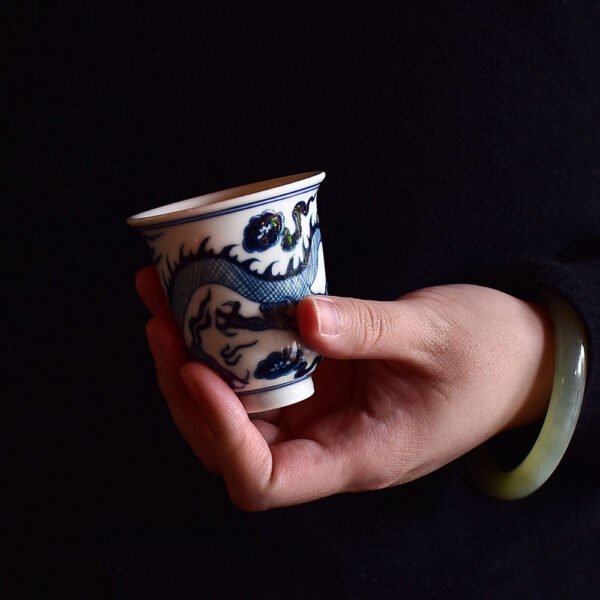
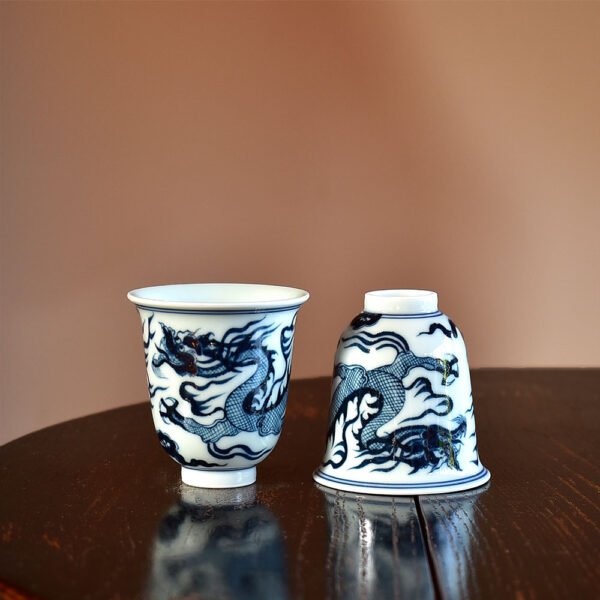
In Chinese culture, the dragon is a very important symbol and totem with rich symbolism. Firstly, the dragon is one of the most sacred, authoritative, and noble images in ancient Chinese culture. It is the incarnation of the gods of heaven, earth, and water, representing supreme authority and divine power. Secondly, the dragon is considered a symbol of good luck in Chinese culture. As it has the special power to control rainfall, it is also seen as the protector of agriculture, representing a bountiful harvest and prosperity. Additionally, the dragon has many other symbolic meanings, such as longevity, authority, success, courage, and wisdom. In traditional Chinese culture, the dragon is a noble, mysterious, and awe-inspiring image, representing people’s yearning for the unknown and the spirit of exploration.
This teacup is made in the style of the Yuan dynasty blue and white porcelain, completely handmade and hand painted. The blue and white dragon pattern is vivid, showcasing ancient cultural and aesthetic values, allowing people to immerse themselves in a beautiful artistic atmosphere while enjoying their tea.
For Yuan blue and white porcelain refers to the blue and white porcelain produced during the Yuan dynasty (1271-1368) in China. The Yuan dynasty was an important period in the history of Chinese porcelain and one of the peaks of Chinese porcelain art. As one of the representatives of that era, Yuan blue and white porcelain exhibited unique artistic styles and technical levels. The characteristic of Yuan blue and white is the use of cobalt blue pigment for painting, which is made of cobalt oxide. After firing, the colour is bright and rich, with extremely high decorative effect. Yuan blue and white porcelain has various shapes, thick and heavy, concise, and fluent lines, and stable and solemn shapes, all made exquisitely.
The evolution of Yuan blue and white is based on the foundation of Tang and Song celadon. Firstly, the glaze colour was improved and innovated. Unique white glaze, eggshell glaze and blue-white glaze were invented to make the glaze crystal clear. Cobalt pigment was imported for glaze colouring. Or using the pigment made from domestic materials.
The formation of tin spots on Yuan blue and white is due to the high content of iron elements in local parts of the blue pigment. After reaching saturation in the high-temperature glaze solution and cooling down, the iron elements in the supersaturated part start to precipitate. If the iron content of the blue pigment is higher and the cooling rate is appropriate, tin spots are more likely to appear on the surface of the ware.
In addition to firing and materials, the formation of tin spots also involves the factor of glaze material. During the painting process, tin spots can also be formed due to the accumulation of blue pigment. Tin spots are more likely to appear on the surface of the ware at the intersections and the starting and ending points of brushstrokes. The formation of tin spots can be said to be a natural creation or an artificial decoration.
This teacup has a thick body and uses the Su Ma Li Qing glaze material (a kind of blue pigment), with a heavy sense of tin spots, revealing a unique charm of the past era. The entire production process is completed by hand, and every detail has been carefully designed and polished, giving this teacup a unique artistic charm. The blue and white dragon pattern is vivid, showcasing ancient cultural and aesthetic values, allowing people to immerse themselves in a beautiful artistic atmosphere while enjoying their tea.
-
 $199.99
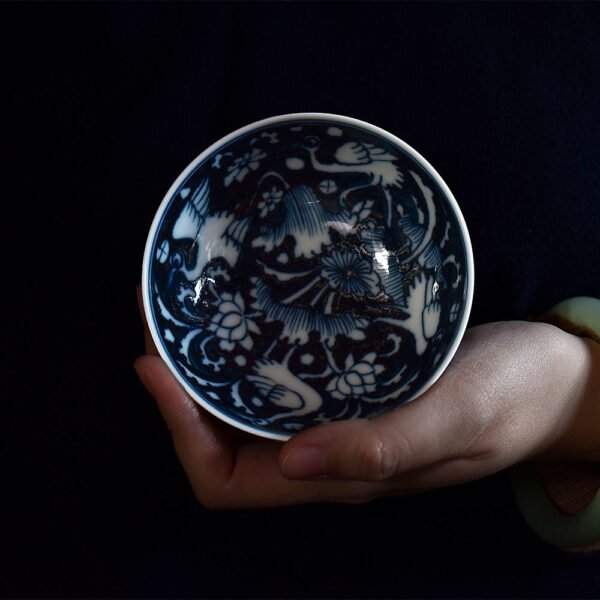
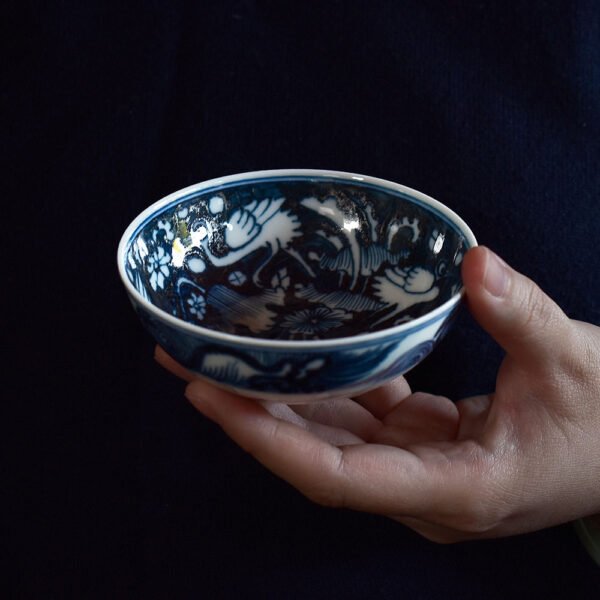
This teacup is made in the style of the Yuan dynasty blue and white porcelain, completely handmade and hand painted. The pattern of “一鹭莲科” or “一路连科” in Chinese culture is derived from the beautiful combination of the heron and lotus leaves. As “鹭” (heron) and “路” (path/road) have the same pronunciation, and “莲” (lotus) sounds like “连” (successive/continuous), the name “一路连科” is a play on words that conveys the beautiful meaning of the pattern. In ancient times, successive successful candidates in the imperial examinations were called “连科,” and “一路连科” is a good wish for students to have a smooth career path and achieve success step by step.
For Yuan blue and white porcelain refers to the blue and white porcelain produced during the Yuan dynasty (1271-1368) in China. The Yuan dynasty was an important period in the history of Chinese porcelain and one of the peaks of Chinese porcelain art. As one of the representatives of that era, Yuan blue and white porcelain exhibited unique artistic styles and technical levels. The characteristic of Yuan blue and white is the use of cobalt blue pigment for painting, which is made of cobalt oxide. After firing, the colour is bright and rich, with extremely high decorative effect. Yuan blue and white porcelain has various shapes, thick and heavy, concise, and fluent lines, and stable and solemn shapes, all made exquisitely.
The evolution of Yuan blue and white is based on the foundation of Tang and Song celadon. Firstly, the glaze colour was improved and innovated. Unique white glaze, eggshell glaze and blue-white glaze were invented to make the glaze crystal clear. Cobalt pigment was imported for glaze colouring. Or using the pigment made from domestic materials.
The formation of tin spots on Yuan blue and white is due to the high content of iron elements in local parts of the blue pigment. After reaching saturation in the high-temperature glaze solution and cooling down, the iron elements in the supersaturated part start to precipitate. If the iron content of the blue pigment is higher and the cooling rate is appropriate, tin spots are more likely to appear on the surface of the ware.
In addition to firing and materials, the formation of tin spots also involves the factor of glaze material. During the painting process, tin spots can also be formed due to the accumulation of blue pigment. Tin spots are more likely to appear on the surface of the ware at the intersections and the starting and ending points of brushstrokes. The formation of tin spots can be said to be a natural creation or an artificial decoration.
This teacup has a thick body and uses the Su Ma Li Qing glaze material (a kind of blue pigment), with a heavy sense of tin spots, revealing a unique charm of the past era. The entire production process is completed by hand, and every detail has been carefully designed and polished, giving this teacup a unique artistic charm.