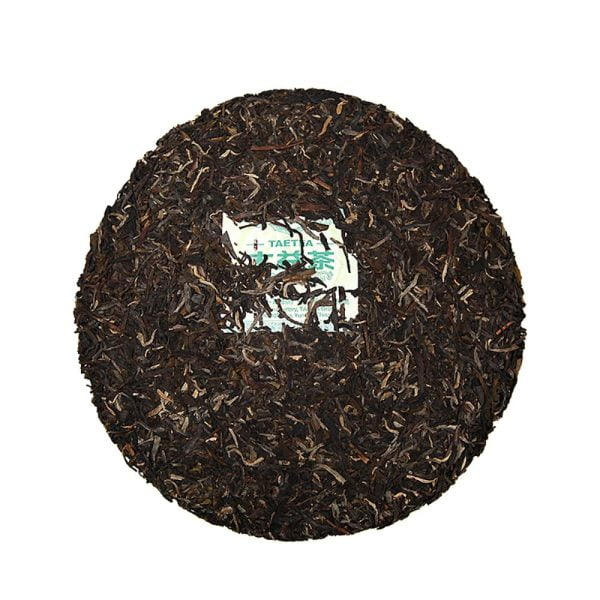

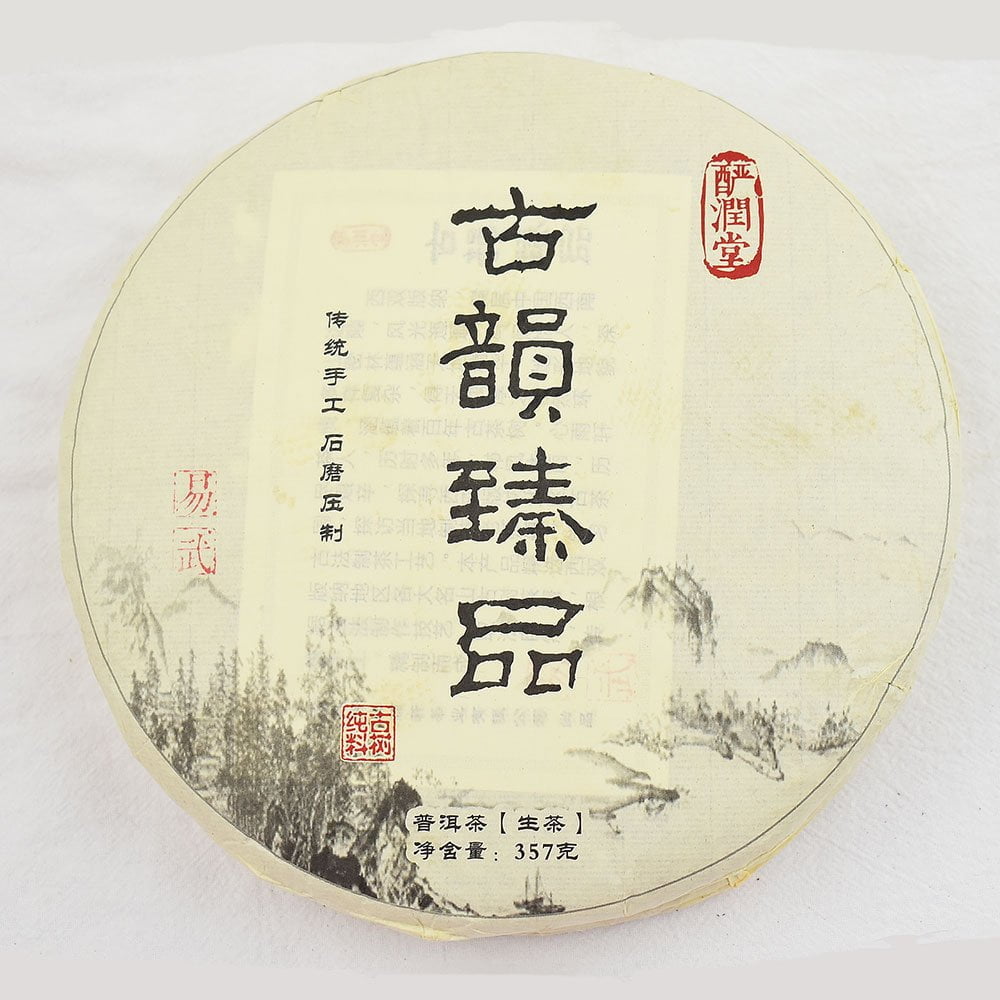
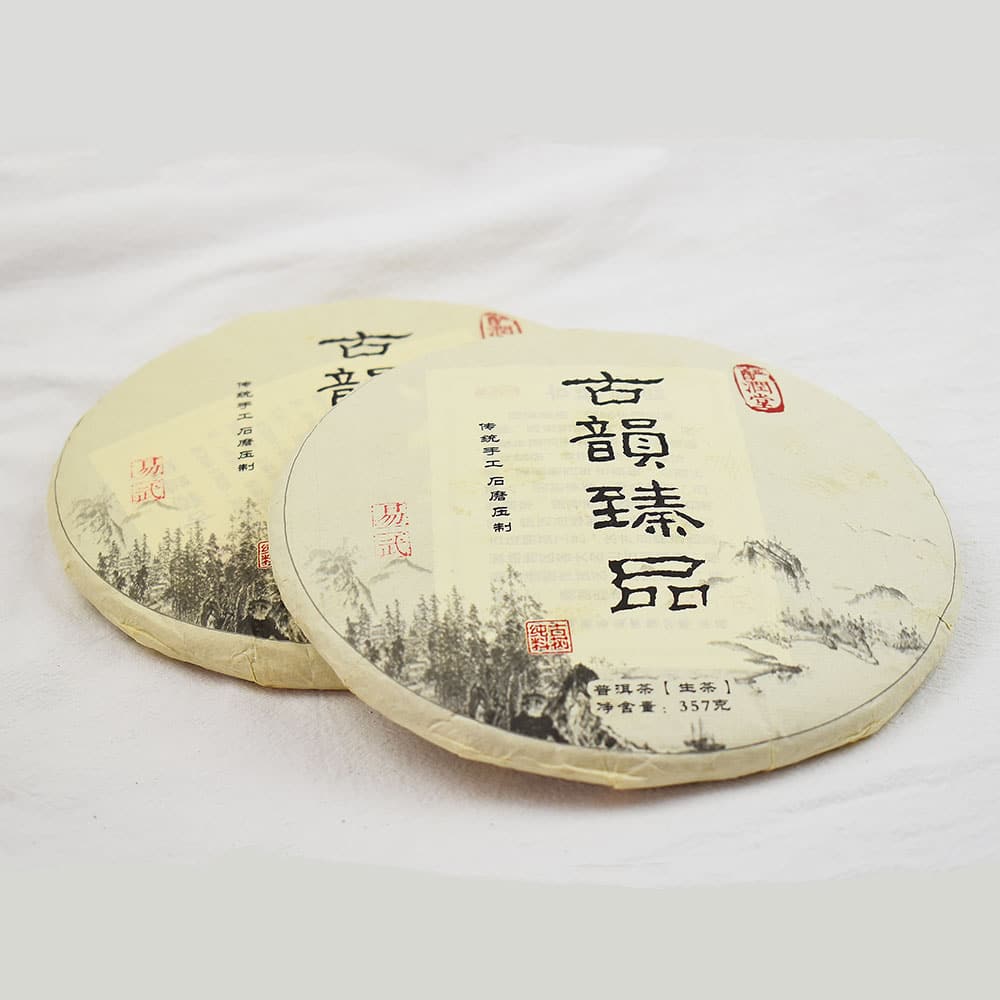
The right formula of Pu-erh tea cake and the technology of fermentation are the two key factors for making high-class Pu-er teas. They are also the core values of Da Yi Tea craftsmanship, which has also been nominated as the national intangible cultural heritage of China. While Da Yi 7572 is well-known for its fermentation technologies, Da Yi 7542 is well-known for its formulation technologies.
Normally, Pu-erh tea is formulated by mixing the same grade tea leaves from different origins, blending the different grade of tea leaves from the same origin, or combining tea leaves produced in different years. This allows us to maximize the quality and taste of Pu-erh tea. Due to the exquisite formulation craftsmanship from Menghai Tea Factory, Da Yi 7542 has a surprisingly stable and premium quality. Although there are many novel formulation technologies nowadays, it keeps its unique and classic taste. The Da Yi 7542 has also become the most classic raw Pu-erh tea cake and become the standard/benchmark of Pu-erh raw tea.
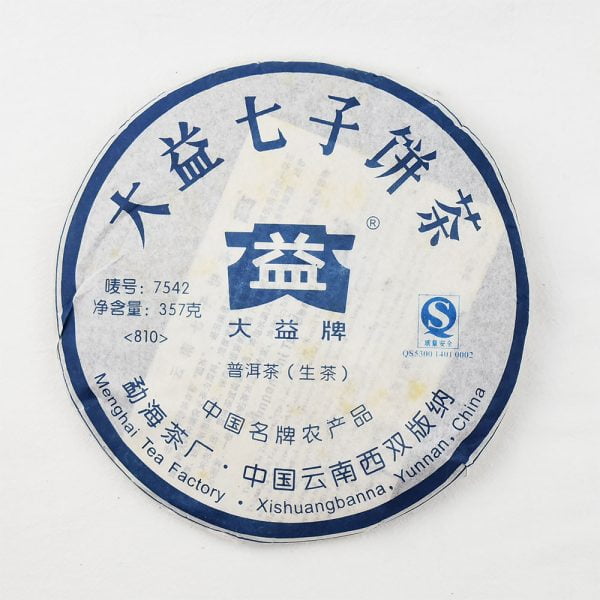
The batch number of our Da Yi 7542 is 810.
What is 7542?
7542 is its serial number. The serial number of Pu-erh cakes has a special meaning. The first two numbers refer to the tea formula used. The third number refers to the grade of tea material used – the smaller the better. The last number indicates a particular tea factory.
Therefore, for this tea cake, the ‘75’ means the formula of the tea cake was developed in 1975 year. ‘4’ means the grade of the tea leaves is level ‘4’ and ‘2’ means it is produced by the Menghai Tea Factory.
Pu-erh made from more delicate tea materials would taste fresher because it is rich in amino acids, and the best Pu-erh is rich in health-supporting substances and strong in flavour. However, it is important to know that Pu-erh made from higher grades of tea is not necessarily the better or more expensive. Pu-erh made from lower-grade tea materials could also have a very aggressive aroma which is attractive to many tea lovers. The aroma of Pu-erh would get stronger when it is aged. When aged, lower-grade of Pu-erh can taste much better than the new and high-grade Pu-erh, and of course, aged Pu-erh will normally be more expensive.
Liam J. –
Gentle, mellow and sweet pu’er that’s perfect for a calm afternoon break.
Archie –
You can really smell the delicate lotus aromas in this tea. Sweet and full of flavour, this is a winner.
Lucas –
A real taste of this traditional style- it reminds me of tea with my grandmother.
Brodie –
For a raw tea, I was surprised at how gentle the flavour is. The sunny colour of the brew is also satisfying.
Ryder L. –
This tea cake has a really deep and complex flavour that evokes the feeling of being in an ancient Chinese garden. Highly recommend!
Jessica D. –
A great example of this style of tea, this has become a regular favourite. Been out of stock for a while 🙁
Kayla H. –
Just like other aged Pu-erh tea, this one does not disappoint. It is light in flavour and the aftertaste is long-lasting.
Akin F. –
I tasted this tea the first time I purchased it. The taste is mellow and sweet. I love tea, particularly Chinese teas, and now this tea is among my favourites.